Eclipse UV Protection

Industry's only 25-year fiber bloom warranty

Atropos Eclipse

Atropos Eclipse™

Co-Cured UV Protection System

A composite crossarm is a fiberglass structure, and fiberglass has one well-known vulnerability: ultraviolet radiation degrades the resin at the surface over years of outdoor exposure. Left unprotected, UV breaks down the polymer matrix and eventually exposes the reinforcing bers themselves, a failure mode the industry calls "fiber bloom".

Traditionally, a polymer-linked urethane coating is applied to the product as a sacrificial layer of protection. Atropos takes it further with its proprietary ATROPOS ECLIPSE™ System, where the UV protection is directly integrated into the pultrusion process before the arm exists as a finished part. Every component of protection is part of the material. None of it is applied to it afterwards.
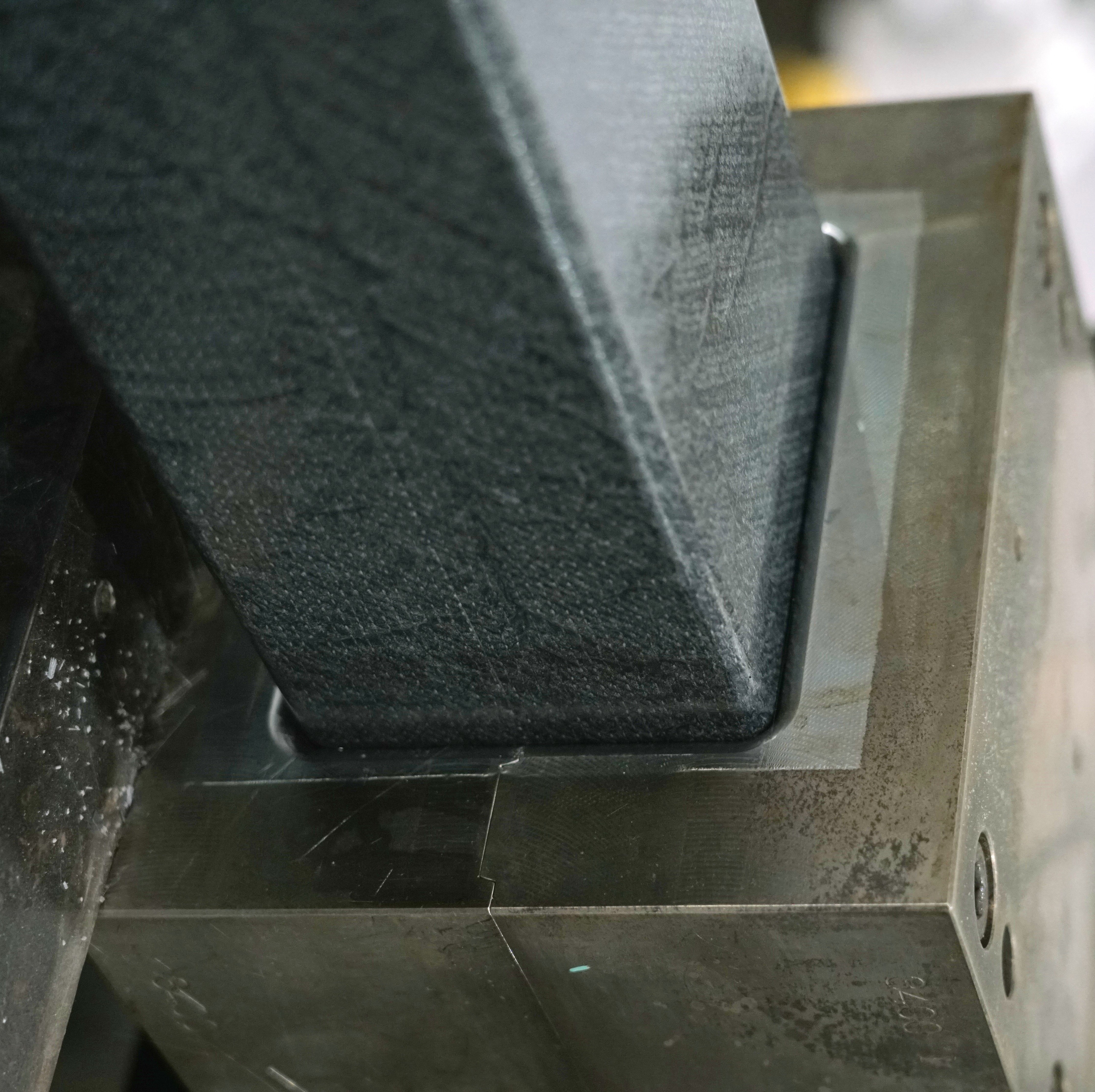
Applied Vs. Co-Cured

The Structural Difference That Matters

The issue isn't coating chemistry but the coating itself. Every applied coating creates a bond line, which is a permanent point of vulnerability that a co-cured material does not have.

  • Adhesion failure: Thermal cycling creates long-term stress between the coating and substrate.
  • Exposed edges + holes: Cutting and field drilling remove protection exactly where the crossarm is most vulnerable.
  • Crazing + microcracking: UV and thermal stress can crack the film, creating pathways for UV exposure.
  • Moisture entrapment: Moisture at the interface can become sealed beneath the coating and accelerate degradation.
  • Application variability: Film thickness, surface preparation, and curing can vary. Atropos protection is controlled as part of the pultrusion process.
sun
Urethane Coating ATROPOS ECLIPSE™ UV Protection
Outer Layer Thickness 1.5 mil D.F.T 8 mils
Application Method Applied hot post-pultrusion Co-cured during pultrusioin
Bond Line Bond line present No bond line
Delamination Can delaminate under thermal cycling and impact No delamination, UV protection built in throughout the material
Chemical Composition Pigment in coating only Proprietary integrated multi-level UV protection system

Atropos Eclipse 25 Warranty

Back Our Claim to Superior UV Protection with an Industry-Leading 25-Year Warranty Program

Why We Don't Paint

Atropos made a deliberate engineering decision not to apply a surface coating. It isn't a manufacturing shortcut but a product integrity position, and one we're prepared to defend technically.

Any coating creates an interface, and any interface is a potential failure point: adhesion loss, delamination, moisture ingress behind the film, thermal cycling stress between coating and substrate. The Atropos system has none of those interfaces, because there is no coating — the UV protection is the material.

Field conditions are hard on any surface coating: banding to poles, bolting hardware, drilling. Crews can't inspect every arm for coating damage after installation. Our system needs no inspection, because there's nothing on the surface to damage.

14,000 Hours, Zero Failure

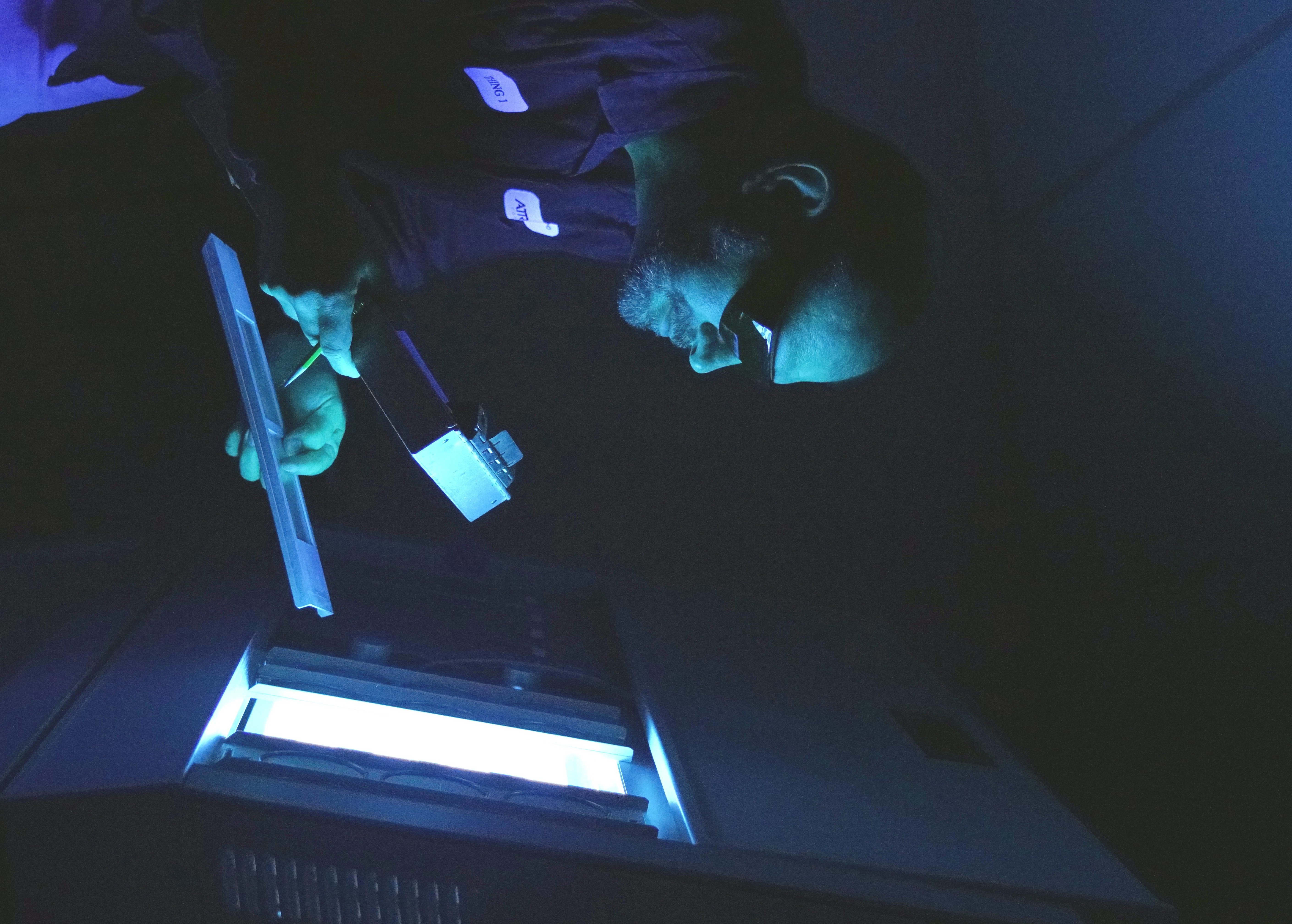
Atropos Eclipse completed 14,000 hours of ASTM G154 QUV-A accelerated weathering with zero failure criteria observed, which is 40% beyond the typical 10,000-hour specification threshold. That result is the direct consequence of an architecture that has nothing to chip, delaminate, or drill away, because the UV protection is a proprietary composition of chemicals integrated into the resin and concentrated in an 8-mil co-cured outer veil.

The material was tested before and after UV exposure for ASTM D695 compressive strength, ASTM D3039 tensile strength, and ASTM D149 dielectric strength. After 14,000 hours, no change was observed in any of these measured properties, confirming the integrity of the Atropos Eclipse UV Protection System.

After 14,000 hours of exposure to UV, the Atropos composite shows no appearance change, fiber blooming, or structural deterioration.

Why Atropos Can Offer this Warranty

A 25-year warranty on a conventional coating is a bet against known failure modes. Coatings rely on a bond line and a thin surface layer, introducing the potential for delamination, blistering, chalking, micro-flaking, and additive depletion. Time, weathering, and field handling can compound these vulnerabilities.

Atropos Eclipse is fundamentally different.There is no coating bond line to delaminate. No film to chalk or crack. No thin surface reservoir of UV additives to migrate and deplete. Multi-layered proprietary components are engineered into the material system and concentrated within a co-cured outer veil formed with the crossarm instead of appling to it afterward. The result is UV protection designed as part of the crossarm itself.

For More Details on Atropos Eclipse™

Don't hesitate to reach out for the Atropos Eclipse Technical Brief.